Preschool Franchise in Delhi vs Independent Preschool: Which Is More Profitable?
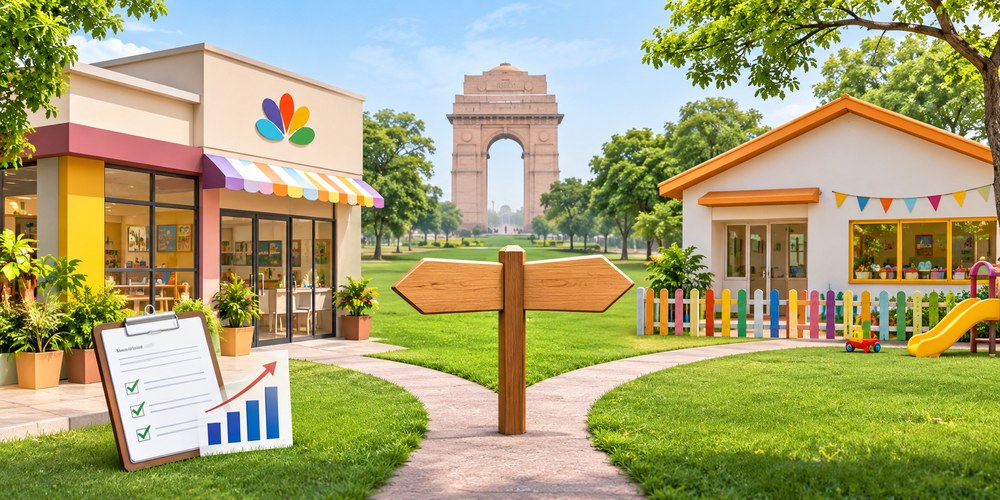
Delhi’s demand for quality early education continues to rise, and parents here are ready to invest in it. That steady demand has made preschools one of the city’s more dependable education businesses. Yet nearly everyone entering the field arrives at the same crossroads early on.
Should you join an established franchise, or build an independent preschool from the ground up? The decision shapes your costs, your risk and your returns for years ahead. This guide examines both routes with care.
Why Delhi Is a High-Profit Preschool Market
A growing number of working parents means more children who need structured daycare and early learning, and Delhi has both in abundance. Fees in the city run higher than in smaller towns, so the revenue earned per child is stronger from the outset.
The wider trend supports this too. India’s preschool market is forecast to grow by USD 1.35 billion between 2025 and 2030 at a 9.7% CAGR, lifted by rising female workforce participation and nuclear family structures, both of which are pronounced in Delhi.
A well-managed centre can reach 20 to 35% margins once it stabilises, usually within the first two years. Competition is the counterweight. The market is active, so brand trust and a well-chosen location often determine which centres fill their classrooms and which fall short.
The Franchise Model
A franchise offers a name that parents already trust, and that familiarity shortens the path to full enrolment.
The support runs deeper than the brand. Curriculum, teacher training, setup guidance and marketing all arrive tested and ready, easing much of the operational load for a first-time owner. Investment depends heavily on the brand and the model: fixed-package franchises typically require a larger upfront commitment, while flexible models let you match the package to your locality and space. Bright Kid Montessori’s four packages for new preschools run from ₹2.69 lakhs to ₹6.17 lakhs plus GST, backed by 19 years in early childhood education and a network of partner preschools across India.
For those exploring preschool franchise opportunities, this predictability is often the deciding factor.
The Independent Preschool Model
Choosing the independent path means creating your own brand from nothing. The reward is complete control. You decide the fees, shape the curriculum and position the school exactly as you envision it.
The trade-off is that every responsibility rests with you:
- Market research to gauge local demand and set fair pricing
- Hiring and training systems designed from the ground up
- Strong local marketing to build a name parents will trust
None of this is beyond reach. It simply asks for more time, and the early errors are yours alone to absorb.
Investment and Cost Comparison
Cost is where the two models diverge most clearly. The table sets the main differences side by side.
| Cost area | Franchise | Independent |
| Upfront investment | Varies by model; fixed packages cost more than flexible ones | Varies, often lower to begin |
| Brand and curriculum | Included in the fee | Built at your own expense |
| Marketing | Supported centrally | Fully self-funded |
| Ongoing fees | Royalty in many brands, none in a zero-royalty model | None, though no shared support |
A franchise requires more at the start, yet it includes the expensive groundwork. An independent setup can begin more modestly, though the cost is paid in time and effort rather than rupees.
Profitability and ROI Comparison
Both routes can deliver a healthy profit. They reach it by different means:
- A franchise tends to fill seats faster on the strength of its brand, so returns arrive sooner and with more certainty.
- An independent school may retain more of each rupee once established, since there is no royalty, though it climbs to that point more slowly.
- A zero-royalty franchise removes that trade-off. You get the recognition, curriculum and support of an established brand, and you keep all your fee collections. For owners researching how to start a preschool franchise in Delhi, this is the structure worth looking for, because a royalty of even a few percentage points compounds against you for the life of the agreement. .
Risk and Stability
The contrast is sharpest here. A franchise carries lower risk because its systems, curriculum and brand are proven before the doors open, and the franchisor has a genuine stake in each owner’s success.
An independent school bears every risk on its own, from an unfamiliar name to admissions that may take several seasons to build. For anyone new to the field, that stability often outweighs the headline numbers.
Admissions and Brand Impact
Admissions determine whether a preschool thrives, and brand carries real weight in that outcome. A franchise begins with recognition, so parents arrive already reassured, which speeds enrolment at every intake.
An independent preschool earns that trust gradually, one family and one referral at a time. Bright Kid Montessori’s work has been recognised by the Times of India, the Economic Times and the India Didactics Association, and the brand has been in early childhood education for 19 years. This is where the leading best preschool franchise brands in Delhi NCR hold their advantage, filling classrooms faster than a new independent name usually can.
Conclusion
Both paths can succeed, and we would encourage you to judge them against your own goals rather than a headline promise. An independent preschool gives full control and, in time, possibly higher margins, though it asks for greater effort, patience and resolve.
A franchise trades a little of that upside for speed, support and a far steadier risk profile, which suits most first-time owners well. Weigh your budget, your experience and the risk you are prepared to carry, then decide with clarity.
Bright Kid Mont operates a no-royalty Flexi Franchise: four package levels for new preschools, full setup and teacher training support, and the option to run the centre under your own school name. Prospective partners in Delhi NCR can request package details for their locality.