Preschool Franchise Cost in India: Setup Expenses, Working Capital and Hidden Charges
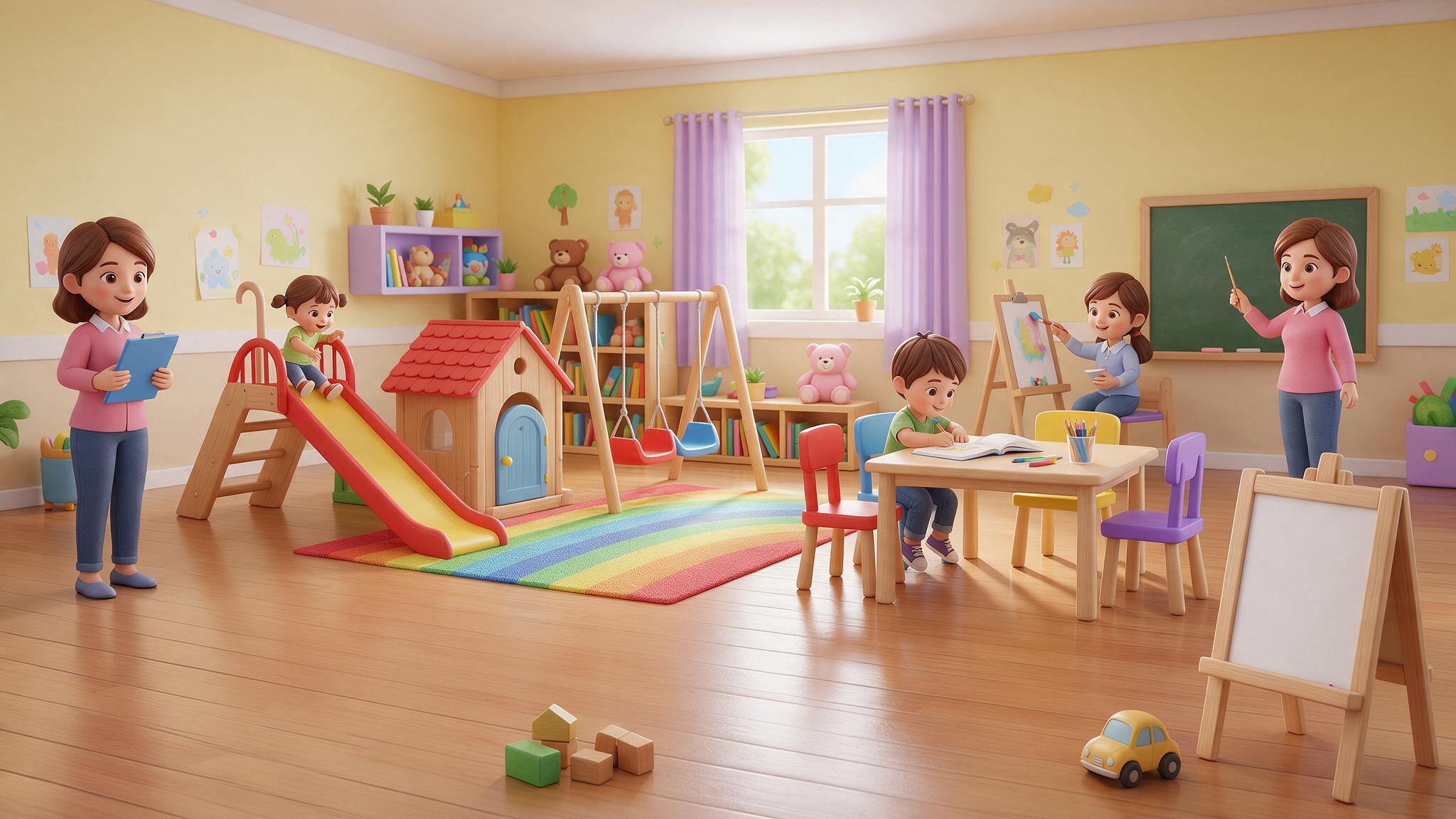
Launching an early learning center is an attractive business opportunity, but setting up a realistic financial plan requires looking beyond the initial brand fee. Many prospective center directors assume that the upfront franchisor fee covers everything needed to open the doors. In reality, your actual launch budget includes real estate deposits, interior renovations, classroom equipment, staff salaries, local advertising, and operating reserves.
Calculating the total preschool franchise cost depends heavily on your chosen location, the physical footprint of your center, and the specific franchise tier you select. Whether you are exploring a Preschool Franchise in Delhi with higher real estate costs or a Preschool Franchise in Bangalore in a growing residential hub, your total outlay will vary. This guide breaks down one-time setup expenses, ongoing operational requirements, and commonly overlooked costs so you can plan a realistic budget.
1. What Is Included in the Preschool Franchise Cost in India?
To understand How to Start a Preschool in India, you must first clarify three key financial terms that are often mixed up during initial discussions:
- Franchise Fee: The one-time brand license payment made to the franchisor for brand usage rights, operational support, and initial onboarding.
- Package Price: The combined cost of the brand license along with initial classroom materials, teacher training, Montessori apparatus, student kits, and basic marketing collateral supplied directly by the brand.
- Total Project Investment: The complete capital required to open and run the center until it reaches self-sustaining operational break-even.
When evaluating a Preschool Franchise in India 2026, keep in mind that franchisors usually provide curriculum blueprints, classroom items, staff orientation, and centralized marketing frameworks. However, the property layout, interior civil works, lease security deposits, and local utility connections remain the responsibility of the center owner.
A low headline franchise fee can be misleading if it excludes core setup requirements like flooring, furniture, or initial working capital. To determine your actual project budget, use this simple formula:
Total Project Investment = Package Cost + Property Deposits & Interiors + Working Capital Reserve
2. One-Time Preschool Setup Expenses You Should Budget For
Setting up a safe, engaging, and compliant learning environment requires several distinct one-time capital investments before welcoming your first batch of students.
Brand License and Onboarding
This includes the primary franchise fee, academic curriculum licensing, teacher orientation modules, and management software onboarding. Applicable GST (currently 18%) is calculated on top of these base fees.
Real Estate and Property Acquisition
Property expenses often represent the largest variable cost. Budget for:
- Commercial or residential security deposits (typically 3 to 10 months of rent, depending on the city).
- Real estate brokerage fees.
- Advance rent payments.
- Legal registration fees for long-term lease agreements.
Interiors, Civil Works, and Child Safety
Converting a residential villa or commercial floor into an early childhood space requires strict child safety modifications:
- Child-safe non-slip flooring or foam matting.
- Rounded edge wall padding and non-toxic paint.
- Classroom partitioning and administrative reception counters.
- Child-friendly washroom fixtures, lowered sinks, and safety gates.
Furniture, Equipment, and Learning Aids
Classrooms need durable, child-sized wooden tables, ergonomic chairs, storage cubbies, Montessori sensory apparatus, indoor activity toys, outdoor play sets, and basic office electronics.
3. Bright Kid Preschool Franchise Packages and What They Include
When evaluating Starting a preschool franchise in India, choosing a model with predictable setup costs helps manage your initial capital outlay. Bright Kid Mont operates on a Flexi Franchise model, offering tailored tiers based on your location and target market:
| Package Tier | Target Market / Scope | Core Inclusions |
| Rural Impact | Rural & Emerging Markets | Essential Montessori learning aids, core curriculum guides, teacher orientation, and foundational setup support. |
| Urban Impact | Tier 2 & Tier 3 Cities | Comprehensive Montessori apparatus, Smart Books, teacher training, and basic local marketing collateral. |
| Standard | Metro Suburbs & Tier 1 Cities | Full classroom material kits, student furniture, Smart Book technology, digital portal access, and launch promotional assistance. |
| Elite | Metro Centric Locations | Premium classroom setups, complete furniture inventory, advanced Montessori equipment, uniform kits, and complete launch execution support. |
Package tiers range from ₹2 Lakhs for rural or emerging setups up to ₹8 Lakhs for Premium Elite setups. Because Bright Kid Mont manufactures its own Montessori equipment and classroom furniture directly, procurement costs remain lower than market averages without requiring compulsory purchases of redundant items.
All listed package prices are subject to applicable GST. Before finalizing any agreement, request a written inclusions and exclusions schedule to confirm exactly which items are covered under the package fee and which must be sourced independently.
4. How Much Working Capital Does a Preschool Need?
Working capital is the operational reserve required to keep your center running smoothly before student tuition fees cover daily expenses. In the first academic cycle, student enrollments usually grow gradually rather than filling to capacity on day one.
Plan to maintain a working capital reserve covering at least six to nine months of operational expenses. Your monthly operational budget should account for:
- Fixed Property Rent: Monthly lease payments regardless of student count.
- Staff Salaries: Salaries for center managers, NTT-trained teachers, and support staff.
- Utilities and Maintenance: Electricity, water, internet, security, and cleaning.
- Local Marketing: Hyper-local digital ads, printed flyers, local newspaper inserts, and event sponsorships.
- Administrative Expenses: Office supplies, printing, and routine repairs.
Keeping an emergency reserve protects your business against slow mid-term admissions, delayed fee payments, or unexpected structural repairs without straining your personal finances.
5. Hidden and Recurring Preschool Franchise Charges to Check
To accurately compare franchisors, review the fine print in the franchise agreement for ongoing and indirect expenses:
- Royalty and Revenue Sharing: Many traditional franchisors collect 10% to 20% of your gross monthly tuition fees. Bright Kid Mont operates on a complete zero-royalty model, letting you keep 100% of your fee collections.
- Annual Renewal and Portal Fees: Check whether the franchisor charges recurring annual fees for academic updates, app maintenance, or brand portal access.
- Mandatory Material Purchases: Clarify whether student workbooks, uniforms, and annual activity kits must be purchased exclusively from the brand at fixed prices.
- Staff Training Charges: Confirm if initial teacher training is included or if replacement staff orientation incurs extra costs throughout the year.
- Freight, Logistics, and Installation: Freight charges for shipping furniture and Montessori materials from central warehouses to your center are typically billed separately.
6. Understanding the Best Preschool Franchise Cost in India: Key Investment Factors
Several operational factors influence your final capital expenditure and determine the best preschool franchise cost in India for your specific business plan:
- Location and City Tier: Property rentals and security deposits in metro cities like Delhi or Bangalore are significantly higher than in Tier 2 or Tier 3 towns.
- Property Type: Converting an existing preschool facility saves substantial interior renovation costs compared to building out a raw commercial space from scratch.
- Facility Size: A 1,500 sq. ft. center requires less furniture, fewer air conditioners, and lower initial maintenance outlay than a 3,500 sq. ft. campus.
- Additional Revenue Services: Adding extended daycare, transport, or after-school activity programs requires extra equipment and staffing, but increases revenue per square foot.
7. How to Calculate Break-Even and Choose the Right Franchise
Determining Which Preschool Franchise Is Best requires analyzing your projected path to operational break-even:
- Calculate Fixed Monthly Overhead: Add monthly rent, core staff salaries, utility bills, and local advertising.
- Determine Net Margin per Student: Subtract direct per-student expenses (workbooks, activity materials, uniforms) from your monthly tuition fee.
- Find Required Student Enrollments: Divide fixed monthly overhead by the net margin per student to find the number of enrollments needed to cover basic operating costs.
Break-Even Admissions = Fixed Monthly Overhead / (Monthly Tuition Fee per Student – Direct Cost per Student)
Compare competing franchisors by evaluating total capital requirements, curriculum depth, ongoing royalty obligations, teacher training quality, and agreement exit terms rather than focusing on brand popularity alone.
8. Conclusion: Plan the Full Preschool Budget, Not Just the Franchise Fee
Evaluating the best preschool franchise cost in India requires looking at the complete investment picture rather than the advertised franchise fee alone. By calculating property deposits, interior childproofing, classroom equipment, and working capital separately, you build a clear financial plan. Choosing a zero-royalty partner like Bright Kid Mont helps lower recurring operational expenses, allowing you to direct more resources toward local marketing, facility maintenance, and high-quality instruction.
FAQs
1. How much investment is required for a preschool franchise? ▼
Total investment typically ranges from ₹5 Lakhs to ₹15 Lakhs depending on location, center size, property rent, and interior quality. While base franchise packages with Bright Kid Mont start from ₹2 Lakhs, additional budget is required for property deposits, interior childproofing, and working capital reserves.
2. What are the main setup expenses for a preschool franchise? ▼
Main setup expenses include the initial franchise package fee, property security deposits, interior painting, non-slip flooring, child-friendly washroom fixtures, classroom furniture, Montessori activity apparatus, outdoor play equipment, signage boards, and initial local marketing campaigns.
3. Can I start a preschool franchise with an investment below ₹5 lakh? ▼
Yes, using a low-overhead setup or flexi-franchise model makes it possible to start under ₹5 Lakhs in emerging or Tier 3 markets. Choosing Bright Kid Mont's entry package starting at ₹2 Lakhs and securing a premises with minimal required renovations helps keep total startup costs below ₹5 Lakhs.
4. What hidden charges should I check in a preschool franchise agreement? ▼
Review the agreement for monthly royalty percentages, annual portal renewal fees, freight and transport charges for setup kits, mandatory student kit purchase prices, replacement staff training fees, marketing contributions, and agreement exit or transfer penalties.
5. Is a preschool franchise a good investment? ▼
Yes, early childhood education provides steady local demand and recurring annual admissions. Partnering with an established brand provides ready access to tested curriculum frameworks, teacher training modules, and brand recognition, reducing the operational risks associated with starting independently.
6. How profitable is owning a preschool franchise? ▼
Profitability depends on local tuition fee structures, enrollment numbers, and fixed overheads like rent. Centers operating under zero-royalty models like Bright Kid Mont retain 100% of student fee collections, helping improve monthly cash flow and achieve faster operational break-even.
7. Which preschool franchise offers the best ROI? ▼
Franchises offering low upfront package costs, zero monthly royalties, direct-from-factory equipment procurement, and comprehensive academic support offer strong ROI potential. Evaluating total setup expenses against projected tuition revenues helps identify the most profitable model for your local market.